


1. DUI specialist Washington D.C.–Case Overview and Legal Framework
The client had been accused of operating a vehicle under the influence after stopping briefly on the shoulder to use a restroom.
Although a coworker initially misled officers by falsely claiming to be the driver, the truth emerged during investigation.
Still, the central question remained: could the government prove intoxication at the time of driving?
The defense focused on the government’s inability to produce any contemporaneous BAC measurement for the client, ultimately showing that the State could not meet its burden of proof.
This case demonstrates how a seasoned DUI specialist evaluates scientific evidence, statutory requirements, and procedural errors to secure a favorable outcome in D.C. courts.
Initial Events and Conflicting Testimony

The client consumed alcohol with a coworker and later believed he had sobered up. He drove only to drop the coworker off.
When traffic slowed, he stopped on the shoulder, briefly left the vehicle, and returned to find D.C. police conducting an active checkpoint nearby.
The coworker falsely stated he had been driving.
The coworker’s false statement triggered confusion, but later admissions clarified that the client had in fact operated the car.
Still, liability requires more than proof of driving; it requires impairment supported by evidence.
Without BAC data or standardized testing, our strategy focused on demonstrating evidentiary insufficiency.
2. DUI specialist Washington D.C.–Challenging Blood Alcohol Assumptions
Because no breath or blood test was performed, prosecutors attempted to rely on Widmark calculations—a retrograde estimation model.
However, D.C. courts treat such calculations carefully, recognizing that they can only be applied with reliable, verified input data.
We emphasized that the government lacked any objective foundation to calculate BAC: the client’s precise weight, exact drinking timeline, food intake, and elimination rate were all undocumented.
Weakness of Widmark Estimates in DUI Litigation
A DUI specialist highlights that Widmark analysis is only as strong as the information fed into it. In this case:
With these gaps, the State’s theoretical calculations could not satisfy the burden of proof.
3. DUI specialist Washington D.C. – Burden of Proof and Scientific Limitations
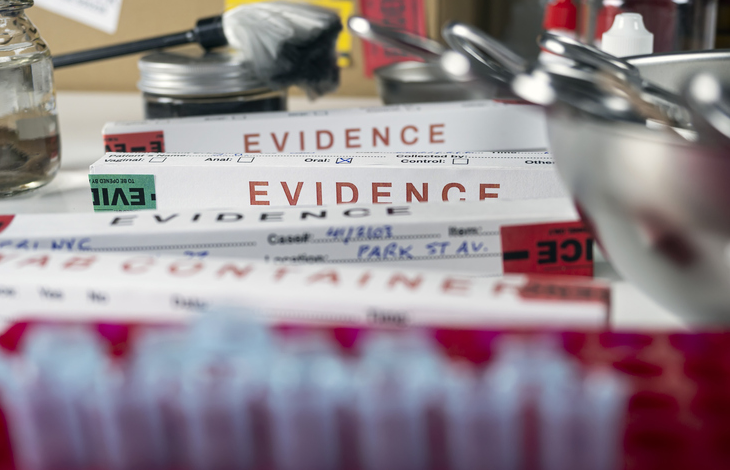
Under D.C. law, prosecutors must prove impairment beyond a reasonable doubt at the time of driving.
Without direct BAC evidence, the government must rely on contemporaneous officer observations or admissible scientific analysis.
Neither existed here.
Our review showed officers never documented slurred speech, unsteady gait, odor intensity, delayed responses, or erratic driving—common indicators used in DUI cases.
Why Lack of BAC Evidence Led to Reasonable Doubt
We demonstrated that:
1. No evidentiary link connected alcohol consumption to impairment during driving.
2. Officers did not contemporaneously evaluate the client’s condition.
3. Retrograde extrapolation lacked required factual precision.
4. The government relied on assumptions rather than measurable data.
Given these weaknesses, the court agreed that conviction would rest on speculation.
4. DUI specialist Washington D.C. – Court’s Decision and Case Outcome
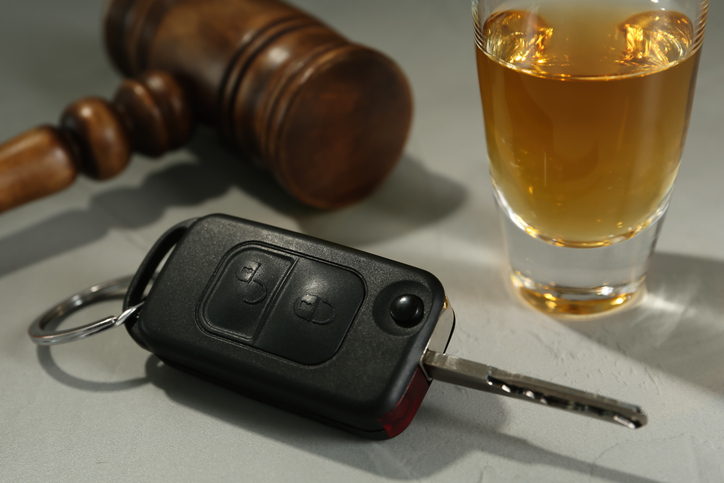
The court accepted our argument that D.C. prosecutors failed to provide scientifically reliable evidence connecting intoxication to the act of driving.
With no breath test, no field sobriety test, and no documented impairment, the prosecution could not establish guilt.
The judge therefore held that the government had not met its burden, and the client was acquitted.
Key Takeaways from the D.C. DUI Defense Strategy
A DUI specialist’s detailed evidentiary analysis can be decisive in court.


27 Nov, 2025
